

Email marketing should be one of your highest-performing channels. You already have the audience, the intent, and the direct line of communication.
So why are your campaigns underperforming?
The reality is simple: you’re measuring the wrong things—and missing what actually drives clicks and revenue.
The Hidden Problem: You Think You Know What Works
Most campaign teams rely on:
- Open rates
- Click-through rates (CTR)
- Conversion metrics
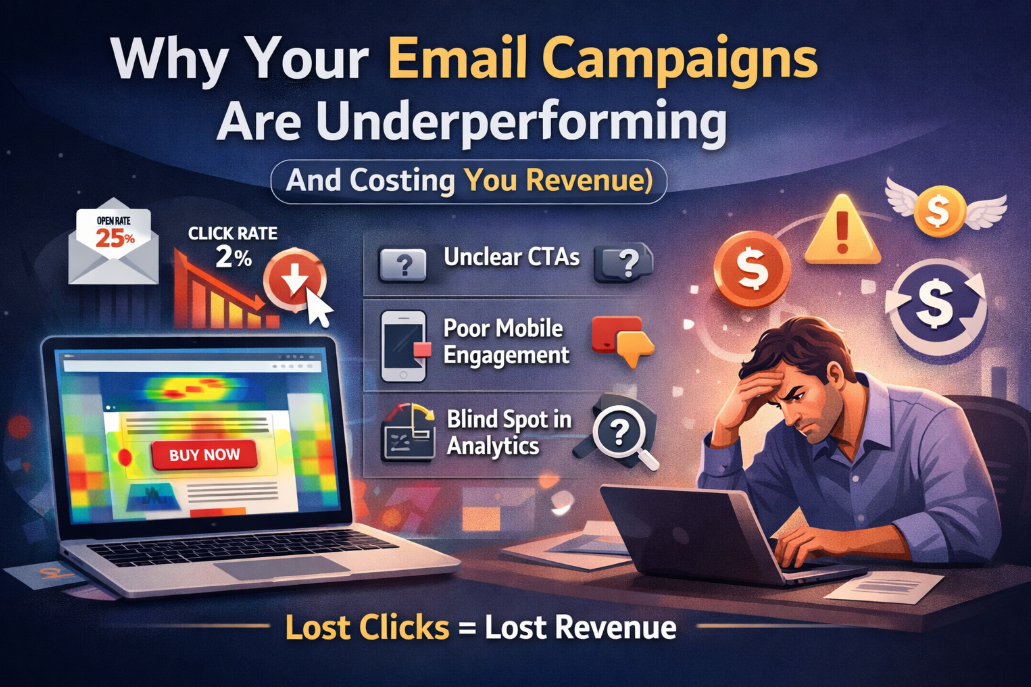
On the surface, everything looks fine. Emails are being opened. Some clicks are happening. Reports look “healthy.”
But here’s what you’re not seeing:
- Which exact part of your email is getting attention
- Which CTAs are being ignored
- Where users drop off before clicking
- Whether your design is helping or hurting performance
This blind spot is where revenue quietly leaks.
5 Reasons Your Email Campaigns Are Underperforming
1. You Don’t Know Where Users Actually Click
You see total clicks—but not click distribution.
That means:
- A CTA might look prominent but gets ignored
- A small link in the header might be stealing all engagement
- Multiple CTAs might be competing instead of converting
Without visibility, you’re optimizing based on assumptions—not behaviour.
2. Your CTA Placement Is Costing You Clicks
Most emails follow a structure:
- Hero banner
- Product blocks
- CTA buttons
But here’s the issue: users don’t follow your layout—they follow their attention.
Common mistakes:
- Primary CTA placed too low
- Too many competing buttons
- Repeated CTAs with unclear hierarchy
Result: users don’t know where to click → they don’t click at all.
3. Your Design Looks Good… But Doesn’t Perform
Design teams optimise for aesthetics. Campaign teams optimise for metrics.
But without real behavioural data, both are guessing.
You might have:
- Beautiful banners with low engagement
- Product grids users completely ignore
- Text-heavy sections that kill momentum
What looks good ≠ what drives clicks.
4. You’re Missing Mobile Behaviour Insights
Most email traffic is mobile-first.
But are you tracking:
- Thumb reach zones?
- Scroll depth?
- Tap accuracy?
If not, you’re likely:
- Placing CTAs in hard-to-reach areas
- Designing for desktop while users browse on mobile
- Losing clicks due to poor usability
5. Post-Campaign Analysis Is Too Slow (or Too Shallow)
After sending a campaign, teams typically:
- Review reports
- Share performance
- Move on
But without deep insights:
- You repeat the same mistakes
- Learnings don’t translate into action
- Performance plateaus
This is where most teams lose long-term revenue growth.
The Real Cost of Underperformance
Let’s break it down.
If your email generates:
- 100,000 opens
- 2% CTR = 2,000 clicks
Now imagine improving performance to just 3% CTR:
- That’s 3,000 clicks → 50% uplift in traffic
And if your conversion rate stays the same, that’s 50% more revenue from the same campaign.
Your problem isn’t reach—it’s conversion inefficiency.
What High-Performing Teams Do Differently
The best-performing CRM teams don’t guess.
They:
- Identify top-performing click zones
- Remove low-performing elements
- Optimise CTA placement based on behaviour
- Align design with real user interaction
- Iterate faster after every campaign
They don’t just send emails—they continuously improve them.
The Missing Layer: Behavioural Visibility
To truly fix underperformance, you need to answer:
- Where are users clicking?
- What are they ignoring?
- Which elements drive engagement?
- How does behaviour differ across campaigns?
This is exactly where most tools fall short.
How CRMX Changes the Game
CRMX adds a behavioural layer to your email reporting.
Instead of just numbers, you get visual clarity:
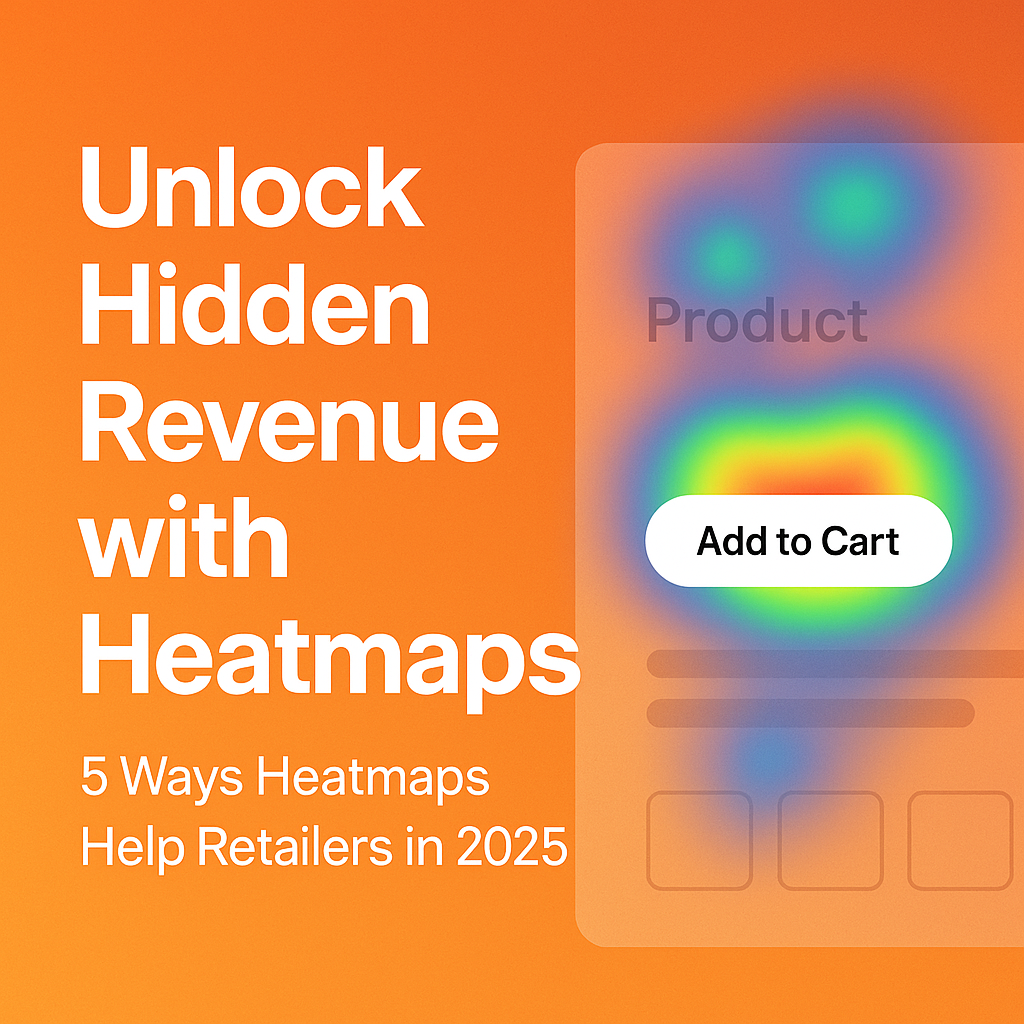
- Click heatmaps on your email templates
- High vs low engagement zones
- CTA performance insights
- Interaction patterns across campaigns
This allows you to:
- Optimise designs with confidence
- Prove what works to stakeholders
- Reduce analysis time significantly
- Improve CTR and conversions consistently
Final Thought
Your email campaigns aren’t underperforming because of your strategy.
They’re underperforming because you can’t see what your users are actually doing.
Once you unlock that visibility, everything changes:
- Better decisions
- Faster optimisation
- Higher engagement
- More revenue